
The Productivity Sweet Spot ~ Episode 3
Success That Feels Good: The Well-being Formula for Women in Business
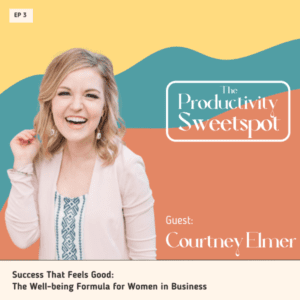
This episode is for female entrepreneurs, mom entrepreneurs and high-achievers who are exhausted from the constant hustle yet still feel unfulfilled. If you’re putting in long hours but struggling with burnout and questioning if you’re on the right path, this episode will give you the tools to regain clarity and focus.
Courtney Elmer reveals the importance of identifying your highest-payoff activities and shares techniques for prioritising well-being while still pursuing ambitious goals. With a passion for aligning professional success with personal wellness, Courtney shares practical strategies for creating a balanced, fulfilling life.
In this episode, we cover…
Quotes from this episode
Transcript
In this episode, we cover…
- Understanding the Root of Burnout
Discussion of why the “more hours equals more success” mindset leads to frustration and stress, plus how self-doubt and overthinking can hinder progress. - Redefining Success and Shifting Mindsets
Exploring how to redefine productivity by focusing on high-impact activities that drive results without draining energy. - Identifying Your Highest-Payoff Activities
Practical steps for identifying the tasks that yield the most significant return on investment for time and energy. - Setting Boundaries for Work-Life Balance
Tips for setting boundaries and building a work rhythm that prioritises personal well-being alongside professional success.
Quotes from this episode
“True success isn’t measured by hours worked; it’s about impact and alignment with your well-being.”
“Burnout doesn’t happen because we’re doing too much, but because we’re doing too much of the wrong things.”
“The path to fulfilment isn’t more work—it’s smarter, intentional work on what truly matters.”
“Self-doubt and overthinking drain our energy; clarity comes when we focus on our highest payoff activities.”
“Success without well-being is a hollow victory. The real goal is to thrive, not just survive.”
Transcript
ANNE RAJOO
Burnout… Well, success is possible without sacrificing our well-being. Unfortunately, though, for many entrepreneurs, the experience is slightly different a lot of entrepreneurs. A lotof entrepreneurs. Well, statistically, over 34% of entrepreneurs experience burnout due to the long hours they work in their businesses. So for many of us, the nine-to-five that we like to tried to escape by becoming an entrepreneur turned into a five-to-nine. The constant grind that we try to escape from, it has caught up with us and often has sort of chained us to our desks as entrepreneurs. In fact, I used to believe that working more hours will bring more success. And unfortunately, that is not the case. And that’s why I’m really excited today to bring Courtney Elmer to the podcast. She’s dubbed the podcast whisperer by the CEO Whisperer, and Courtney Elmer is a Forbes featured, top 1% podcast host, but today she won’t be talking about podcasting. We’ll be talking about success without burnout.
Welcome to the Peaceful Productivity Pod.
I’m your host. Anne Rajoo and together we redefine productivity and find your sleep spot where performance meets happiness.
I grew up in East Germany in a tiny village near the Polish border. It was a village that was part of an army base, so my dad was in the army, which taught me quite a bit of discipline. Most of the kids in the village would be part of Army families. So their dads would also be in the army, and most of the moms and women would either be at home to look after the family, or, like my mom, work in a textile fabric or some sort of manual job that was available in the next town. I looked after my little brother from a young age. That taught me a lot of responsibility. And I used to be in an athletics club. I was an athlete, and my childhood dream was to become an Olympian athlete. And I trained really hard every day, mostly, and we competed at national level. That really taught me consistency, dedication, and, obviously, hard work. So I think this upbringing has played a big role in my work experience and in my life experience. Where I would always give at least 100% for everything I do, it at work, be it as a mom, friend, woman, whatever I could be. But there was this always, this notion of me doing really well, holding myself to incredibly high standards, giving my best, learning and improving constantly, which sounds great. Definitely has led me to achieving some success. However, it’s also been a big part of the reason why I experienced burnout, not once, probably I would say three times, two times for sure, three times more likely.
And then entrepreneurship. I didn’t actually want to become an entrepreneur. My dad, after Germany, was reunited, and eventually the army base was closed down. He then changed his profession, and eventually he had his own business because he always said, most people work to live, but my dad lives to work. So work has been something in my family that has helped, been held to a very high, high standard, or it’s been looked up to. And so my dad would work at least 50 hours a week, six, mostly, seven days a week, as long as I can remember. And really our first family vacation, real family vacation, not visiting grandparents and things like that, was when I was 16 because my dad was always too busy to take vacation. He had to work.
So I didn’t want to become an entrepreneur, because I thought that’s that’s what it’s going to be, and that’s not the life I wanted to live. When I started with my own business, while I really tried to focus on creating a lot of time for my family and then not working many, many hours. Eventually I got to the point where I was working for many hours. And because of the fact that I have a young family, I was working very late evenings. I was working in between here and there. Constantly just on, constantly working on something and never being able to switch off, and eventually that led to burnout.
I think this is a very common experience, and that’s why I’m really, really excited to have Courtney Elmer on the podcast today, because she says how she would self-sacrifice and self-sabotage in her entrepreneur’s journey. And how she teaches other women not to call themselves back by sacrificing. And I love how she shares her experience, and just a quick word on my own experience. I think my self sabotaging, which sort of was covered up by hard work and trying to overachieve, was caused a lot of self-doubt, overthinking my decisions, going back and forth “is this the right thing to do”, changing course, changing direction. And while changing direction is not necessarily anything bad, Courtney is living proof of that, because when I had when I recorded this with Courtney, she was speaking more about, you know, life and business with ease while now she teaches podcasting, so she has definitely pivoted in her business. So it’s not necessarily a bad thing, but I think because of self-doubt, it’s something that we jump into, and then we create yet another offer, yet another product, we try to do another launch. And we just react to certain results we’re experienced in business, and that can be positive or negative results .But we tend to add things more things add things on to what we’re already doing, instead of substructing. And I think this is one of the biggest secrets to Peaceful Productivity. It’s not what most productivity gurus tell you, is to squeeze more things into your day, manage your time better, make the most of every minute. It’s actually about removing things from your to do list. So that’s what Courtney is going to share with us. Let’s
hear it now.
COURTNEY ELMER
And so fast forward, we got married. I had been having some minor health issues before the wedding. Sinus infection, nothing really out of the ordinary, just, you know, some immune system things going on that I thought was just because of this stress so working so much and planning a wedding at the same time. And when I got home and went back to the doctor for a follow-up visit. That was a day I was diagnosed with cancer. Two days after we got home from our honeymoon, and I was just 25 years old at the time. I can remember it like yesterday, sitting in the doctor’s office, knowing that I needed to figure out a different way to have the success that I wanted without sacrificing the things and the people that I loved along the way. And so that was when I really began to question: Is hard work really required for success? That was the question I started asking myself. Is it possible to have success without working so hard, or at least not as hard as our culture makes us think that we need to be working. And so after spending the past almost seven years now researching stress and overwhelm and women and business, I’ve developed, you know, what you mentioned, the effortless life method, which I know we’ll get into a little bit more. That’s led me, really, to doing the work that I do in the world today. It’s because the answer that I found to that question is, no, our work is not the key ingredient for success. There is a different way, and it is possible to really create a lifestyle you love and have success at the same time without feeling like it’s a trade-off, or you have to sacrifice one for the other.
ANNE RAJOO
It’s a beautiful message, because I think, as an entrepreneur, it’s quite easy to get into this, this grind as well, because we pour our heart and soul into the business, and we want to do everything for it. But I guess, in many cases, especially as moms, it’s not the reason we start that. We want to work like crazy. We want to, you know, create something where we have time. So I love the message, thank you for for sharing your your journey with us.
So yeah, of course, the effortless life method. So tell me, please, what is it and how does it work?
COURTNEY ELMER
So the effortless life method is a five-part method that we teach entrepreneurs who want to grow and scale their business without overworking themselves. You know. These are the entrepreneurs that are spending the late nights on their laptop. They’re working weekends. It’s hard for them to get work off of their mind, and they’re just wondering, you know, what am I missing? They’re doing everything they feel they’re supposed to be doing, but things still aren’t clicking, and they don’t seem to be getting the momentum they feel they should have with the amount of hours they’re putting in.
So the method is really designed for that person.
It’s five steps, which really, you know, dives into the three key components of what it means to be an effortless CEO, which is mindset, commitment and strategy. And often what we see is that people have one or two of those elements present in their business. But few have all three, and when you have all three, that’s when you can truly step into the role of what we call an effortless CEO, that your business needs you to be where you can grow it sustainably, and as the saying goes, work smarter, not harder.
And so we teach the method, you know, which is really five steps to cultivating a winning mindset and really first focusing on your, you know, the space between your ears and asking yourself those tough questions that a lot of entrepreneurs don’t really ask themselves on a daily basis. To know that, you know, is it something that I’m limiting myself? You know, is it some way that I might be sabotaging myself or holding my own self back and kind of digging into some of those fears that we have that come up. Right self-doubt, overthinking decisions, of going back and forth or making a decision and then wondering, was that the right decision to make all those little things that happen on this journey of entrepreneurship.
Really cultivating a mindset of a six or even a seven figure entrepreneur, and learning to think like a successful entrepreneur, which is really the first piece, and then from there, making sure that you have the right strategy in place for your business. Because there’s a lot of people out there, you know, and they sell you tactics, right? How to build a list, how to, you know, create a marketing funnel, how to post on social media and connect with your audience, and all these different pieces, whereas what you really need is the box to the puzzle, right? And so what we see is a lot of entrepreneurs are trying to put those, all these pieces together, and it becomes so overwhelming because they’re not really sure what that box looks like, and, more specifically, how the box to that puzzle should look for their business. And we all know, like, you know, when you think about putting together a jigsaw puzzle, it’s easier when you have the box to know what that picture should look like in the end, right?
So it’s about just learning what this strategy is for your business, identifying your highest payoff activities, and then taking that big-picture vision you have and almost reverse engineering the process so you can have clear steps and a clear plan in place to help you put that vision into practice. For it to become your reality. And then the last piece that we really focus on, you know, in these five steps, is assessing your level of commitment. And this, again, is something that most entrepreneurs don’t think about. But there’s an interesting phenomenon that really happens when you get into this entrepreneurial world, where at the beginning, your commitment level is at an all-time high, and you’re like, I am willing to do whatever it takes. I want this to work. I want it to be successful. And so, you know, you hit the ground running, but along the way, the more you learn and the more you know, the more knowledge you gain. This weird thing happens where it’s like, the more you feel like you don’t know, and the more you feel like you have to learn, and the more you think you need to have all this more information right to become an expert in or an authority in your industry.
And the truth is that, no, it’s not about how much knowledge you have. It’s about knowing how to leverage the knowledge and the expertise you already have to create the business that you’re dreaming of. And so that’s kind of that last step comes into place where we really dive into that commitment piece of it all. And, you know, help you, like I said, leverage the skills, the talents and – was a word I’m looking for; it just escaped me – the talents and get your commitment level. You know, just like your expertise, that’s it you already have right into building this dream business. So it all comes together, you know, in this beautiful, beautiful framework that can really be used through the lifetime of your business. And that’s what’s unique about it. It’s not something that you’ll just apply once and then, you know, that’s it. It’s something that can literally, you can adapt and adopt into your lifestyle, and it becomes simply the way you run your business.
And you know, what I really learned is I had to let go of what I thought it meant to be fully present and this expectation of fully present in my mind versus what would play out in the course of the day as reality. And so once I was able to relax my expectations a little bit, things started to flow a lot easier. And dare I say, they became more effortless. And they really did, because when I relaxed that expectation in my mind, I would notice myself sitting on the floor putting together blocks with my son, thinking about work, feeling the feeling of frustration that I couldn’t go answer that email right away, or knowing that I couldn’t get to that thing on my list, and also being able to relax that, knowing that there would be space that I could get to, that it might not be according to my own timeline, but I know myself, and I knew that it would get done. That’s just a little example, you know, of how I relaxed that like in the moment.
ANNE RAJOO
So good. This is so good. So yes, instead of adding more things to your list, simplify, and I always love to say to my clients, “simplify to amplify” focus on the activities with the highest payoff and strip things back.
So I would love for you to take a minute after this episode and just really think before you dive into your work. What you’re currently working on is that giving you the highest return on your time and energy?
And yes, energy, let’s focus on the energy more than the time, actually. And in the last episode, when I spoke to Heather Chauvin, we had a chat about the energy and the importance of energy as our most valuable resource.
So yes, let’s focus on the activities that bring the right outcomes that truly matter. Truly matter to you as a person, that matter to your business, to the people that you work with, and the people that you hold near and dear to you.
So really, let’s “simplify to amplify”.
So I hope you enjoyed this episode today, and I would love to hear what you’re actually working on. What are those projects that bring the highest return on energy? Hop over on Instagram. That’s where I usually hang out most, and you find me there @_annerajoo_, and let me know. And of course, please spread the word, share the Peaceful Productivity Pod with your friends and colleagues and anyone who needs a bit of a redefinition of productivity.
And lastly, come back next time I’ve got the wonderful Dr Gertrude Lyons on the podcast. She will talk about self-care and how it’s really essential for us, women mothers, to prioritize our well-being, for our personal resiliency, but also our family resiliency, and obviously our business too. So come back next time and until then he peacefully productive. I’ll catch you soon!
Listen on your platform of choice


View all episodes
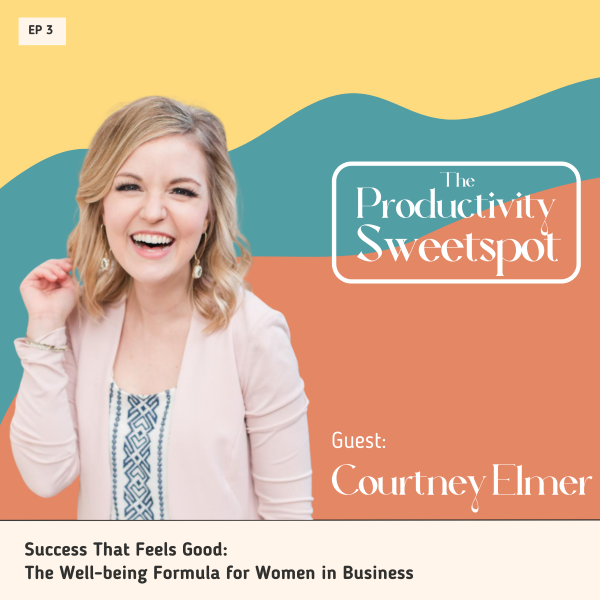
Get more of courtney
Do you struggle with being productive?
Discover where to start when creating business harmony and work-life fulfillment with the Wheel of Peaceful Productivity
Keep In Touch with Anne
Subscribe to her newsletter
Peaceful Productivity Letter
Join hundreds of readers and enjoy three actionable tips on how to make the most of your time.
Thank you!
You have successfully joined our subscriber list.